
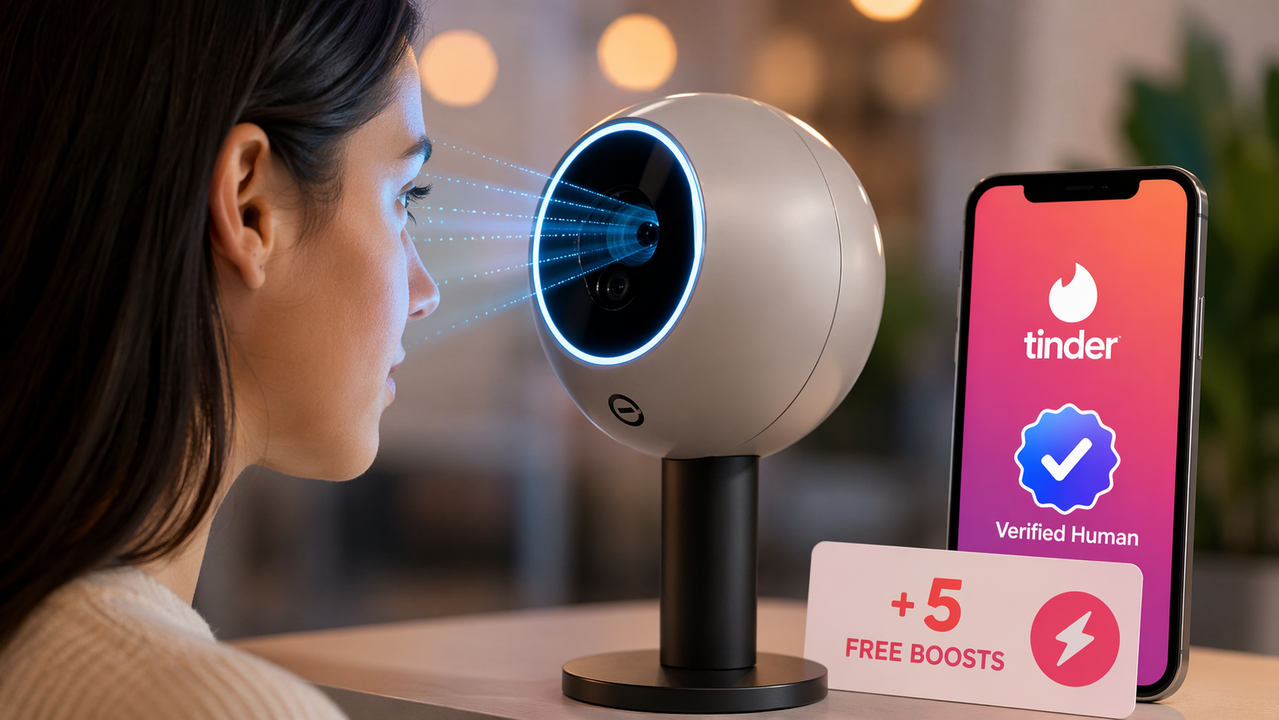
Tinder and Zoom are reportedly considering the introduction of eye scanning technology as a way to confirm that users are genuinely human, amid growing concerns about the rise of artificial intelligence driven impersonation online. The proposed systems would use biometric verification, specifically scanning a user’s eyes, to distinguish real individuals from increasingly sophisticated AI generated profiles and bots.
The move reflects a broader challenge faced by digital platforms. As generative AI tools become more advanced, fake accounts are becoming harder to detect using traditional moderation methods. On dating platforms such as Tinder, this has raised worries about trust and safety, while Zoom has faced similar concerns around meeting security and identity verification.
Eye scanning, often linked to iris recognition technology, is seen as one of the more reliable forms of biometric authentication. Supporters argue that it could significantly reduce fraud, catfishing and automated spam accounts. However, the proposal is already prompting debate about privacy and data protection. Critics question how such sensitive biometric data would be stored, who would have access to it, and how it might be used beyond verification purposes.
Both companies are said to be in early stage discussions, with no confirmed rollout timeline. Regulators in the United Kingdom and Europe are likely to scrutinise any such move closely, given strict rules surrounding biometric data.
If implemented, the technology could mark a turning point in how online platforms balance user convenience with the need for stronger identity checks in an AI driven world.
Author: Abel Vazquez Sanchez