
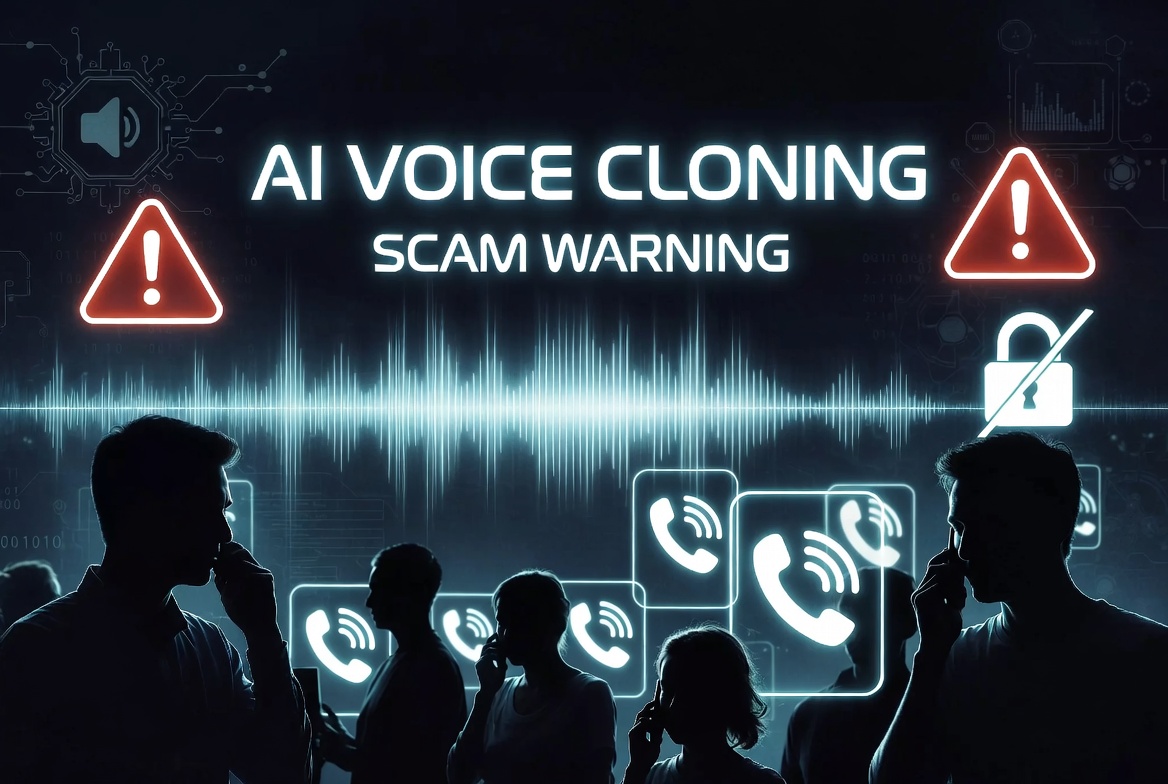
Criminals have accelerated their use of artificial intelligence voice cloning tools to carry out sophisticated fraud schemes. These attacks often involve impersonating family members, company executives, or trusted officials to extract money through urgent and emotionally charged requests.
Perpetrators require only a brief sample of publicly available audio, frequently sourced from social media profiles, to create highly realistic voice clones. Victims then receive telephone calls that sound indistinguishable from the real person, pressing them to transfer funds immediately or approve sensitive actions.
Official figures indicate that Americans lost $893 million to AI-facilitated scams in the previous year alone, with voice cloning representing a rapidly expanding segment of these crimes. Similar increases have appeared in other countries, affecting both individuals and businesses. The technology has reached a level of sophistication where even careful listeners find it difficult to identify fakes during stressful conversations.
Experts warn that family emergency scams remain particularly effective, as callers mimic distressed relatives in need of quick financial help. In corporate settings, attackers clone executive voices to authorise fraudulent payments, exposing organisations to significant losses.
Individuals can protect themselves by verifying any unusual request through an independent communication channel, such as calling back on a known number or requesting a video conversation. Establishing a pre-agreed family code word for genuine emergencies adds another layer of security. Limiting the sharing of personal voice recordings online also reduces vulnerability. When a call raises doubt, the safest response is to end the conversation and confirm details separately.
This trend compels a fundamental reassessment of trust in voice communication. What was once considered a reliable indicator of identity now demands additional scrutiny before any action is taken. As the technology becomes more accessible, both consumers and companies must adapt their verification processes to counter this evolving threat.
Author:Oje.Ese