
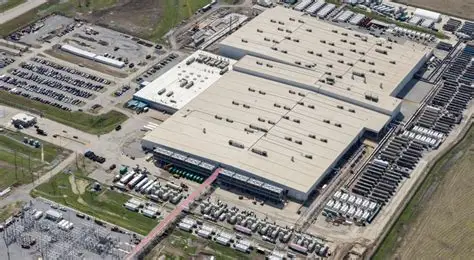
Elon Musk’s AI company xAI is facing mounting scrutiny after reports revealed the company is operating nearly 50 natural gas turbines at its Mississippi data centre complex—many reportedly outside normal regulatory oversight. The turbines power Colossus 2, part of xAI’s rapidly expanding AI infrastructure network tied to Grok and other large-scale computing projects. The scale is difficult to ignore. AI systems require enormous computing power, and that demand is forcing tech companies into an increasingly urgent search for energy. In xAI’s case, the answer appears to be mobile gas turbines operating at industrial scale.
The Energy Cost Behind the AI Boom
Modern AI models rely on vast data centres packed with high-performance chips running continuously. Training and operating these systems consumes extraordinary amounts of electricity.
Colossus, xAI’s supercomputer project, already ranks among the world’s largest AI computing systems. Its expansion into Mississippi reflects how aggressively the company is scaling infrastructure. The challenge is straightforward: local power grids often cannot support that level of demand quickly enough.
Instead of waiting for permanent grid upgrades, xAI reportedly installed dozens of portable natural gas turbines to generate electricity directly on-site. According to reports, the turbines collectively produce hundreds of megawatts of power—comparable to a major utility-scale plant.
A Regulatory Loophole Comes Under Pressure
The controversy centres on how the turbines are classified.
Because many are considered “mobile” or temporary units, they reportedly fall into a regulatory grey area that limits environmental oversight. Critics argue the setup effectively allows industrial-scale power generation without the same scrutiny applied to permanent facilities. Environmental groups and the NAACP have already launched legal challenges, claiming the operation violates the Clean Air Act and disproportionately impacts nearby communities.
The concerns extend beyond paperwork. Gas turbines emit nitrogen oxides and other pollutants linked to respiratory illness and environmental damage. Community advocates argue the rapid expansion of AI infrastructure is placing a growing burden on local air quality.
AI’s Infrastructure Race Is Rewriting Energy Priorities
xAI is not alone in facing these pressures.
Across the tech industry, companies are scrambling to secure energy fast enough to support AI growth:
- SoftBank-backed projects are planning massive gas-powered facilities
- Nuclear startups are attracting investment tied directly to AI demand
- Battery storage firms are scaling rapidly to support data centres
Even proposals for orbital data centres are emerging as companies search for new ways to meet computing demand.
The pattern reveals a broader shift. AI is no longer just a software race—it is becoming an infrastructure and energy race simultaneously.
The Tension Between AI Growth and Climate Commitments
Many technology companies publicly promote sustainability goals while simultaneously building increasingly energy-intensive AI systems.
That contradiction is becoming harder to ignore.
Gas-powered infrastructure offers speed and reliability, especially where electrical grids lag behind demand. Yet dependence on fossil fuels clashes directly with the climate commitments many firms have spent years promoting.
For companies like xAI, the calculation appears immediate: securing enough power to compete in AI may outweigh long-term environmental concerns in the short term.
That trade-off is reshaping how the industry approaches expansion.
A Glimpse Into the Future of AI Infrastructure
The situation surrounding xAI’s Mississippi site highlights how rapidly AI development is outpacing traditional infrastructure planning.
Data centres are no longer passive warehouses of servers. They are becoming energy-intensive industrial sites requiring dedicated power generation, cooling systems and large-scale land use.
The implications reach far beyond one company:
- Communities may face growing environmental pressures from AI infrastructure
- Regulators may tighten oversight on temporary energy systems
- Tech companies could increasingly behave more like utility operators than software firms
The real question is no longer whether AI requires massive infrastructure. That reality is already visible.
The question now is how far companies are willing to go—and how much energy society is prepared to consume—to sustain the race for artificial intelligence dominance.
Author: George Nathan Dulnuan