
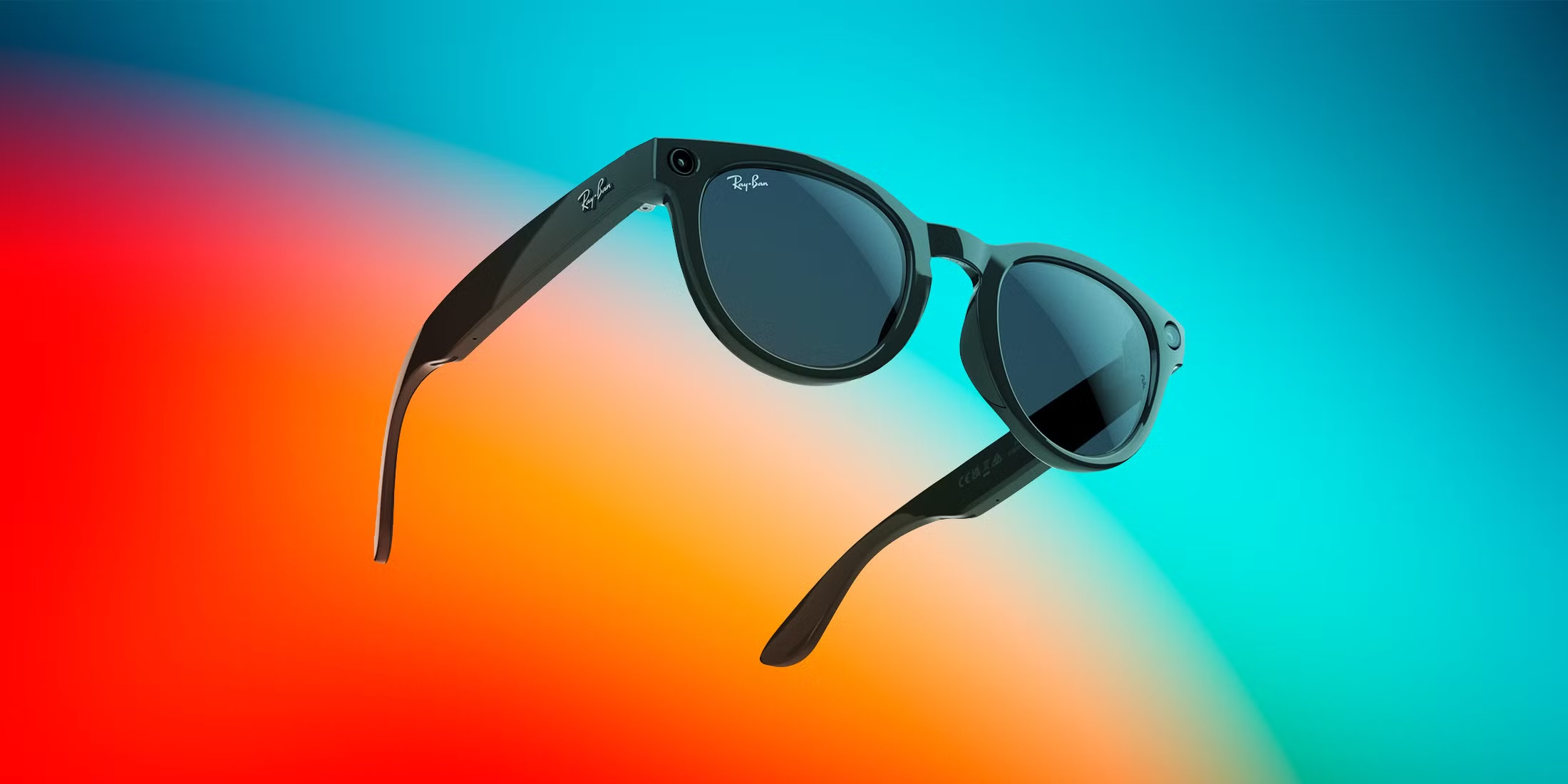
Meta has expanded its push into wearable AI with the release of two new frame styles for its Ray-Ban smart glasses lineup, sharpening its focus on both function and everyday usability.
The latest additions, dubbed Blayzer and Scriber Optics, mark a deliberate move toward inclusivity in vision care. At launch, both designs support “nearly all prescriptions,” covering a range from -6 to +6 and accommodating users with astigmatism. That decision signals a clear intent: make AI eyewear viable not just as a novelty, but as a daily essential for people who rely on corrective lenses.
Comfort sits at the centre of this update. Meta has introduced several physical refinements aimed at improving long-term wear:
- Overextension hinges for added flexibility
- Interchangeable nose pads for a more precise fit
- Optician-adjustable temple tips to fine-tune comfort
Anyone who has worn glasses for hours at a stretch knows how small pressure points can turn into distractions. These tweaks address that reality directly. The addition of adjustable nose pads alone could resolve one of the most common complaints among users—poor balance on the bridge of the nose.
Pricing, however, shifts the conversation. The new models enter the market at a higher tier than Meta’s standard Ray-Ban smart glasses. In the United States, prices begin at $499, while customers in the UK and Australia will see them arrive on April 14 at £429 and AU$709.
That base price only tells part of the story.
Prescription lenses come at an additional cost, scaling depending on the strength required. Extras such as transition lenses—which automatically darken in bright conditions—push the total higher. A fully customised pair, with premium add-ons, can climb past $1,000. One configuration on the US preorder page reached $1,024. More moderate builds, particularly for those with less complex prescriptions, appear to fall within a $599 to $799 range.
This pricing raises a practical question: how much are users willing to invest in eyewear that blends vision correction with AI capability? For some, the answer may mirror decisions they already make with smartphones—pay more upfront for tools that integrate seamlessly into daily life.
Meta has also refreshed the accessories. Buyers will receive a new Dark Brown charging case, replacing the tan and limited-edition black versions previously offered. It’s a small shift, but one that reinforces the product’s positioning as both a tech device and a fashion item.
Beyond the Ray-Ban line, Meta continues to iterate across its broader eyewear portfolio in partnership with Oakley.
The Oakley Meta Vanguards are gaining transition lenses for the first time, addressing a notable limitation. Previously restricted to permanently tinted options, the glasses struggled in low-light conditions. The addition of adaptive lenses makes them far more versatile. New Black and Rose Gold lens options further expand their aesthetic appeal.
The Oakley HSTN range is also evolving. Users will now have access to Dark Golf lenses and clear-to-brown transition options, offering greater flexibility depending on lighting and activity.
These updates point to a broader strategy. Meta is not simply releasing gadgets—it is refining a category. Each iteration narrows the gap between traditional eyewear and connected technology.
The real test lies ahead. Will consumers embrace AI glasses as naturally as they did wireless earbuds or smartwatches? Or will pricing and niche functionality keep them on the margins?
The answer may depend less on the technology itself and more on how seamlessly it fits into routines people already live by.
Author: George Nathan Dulnuan