
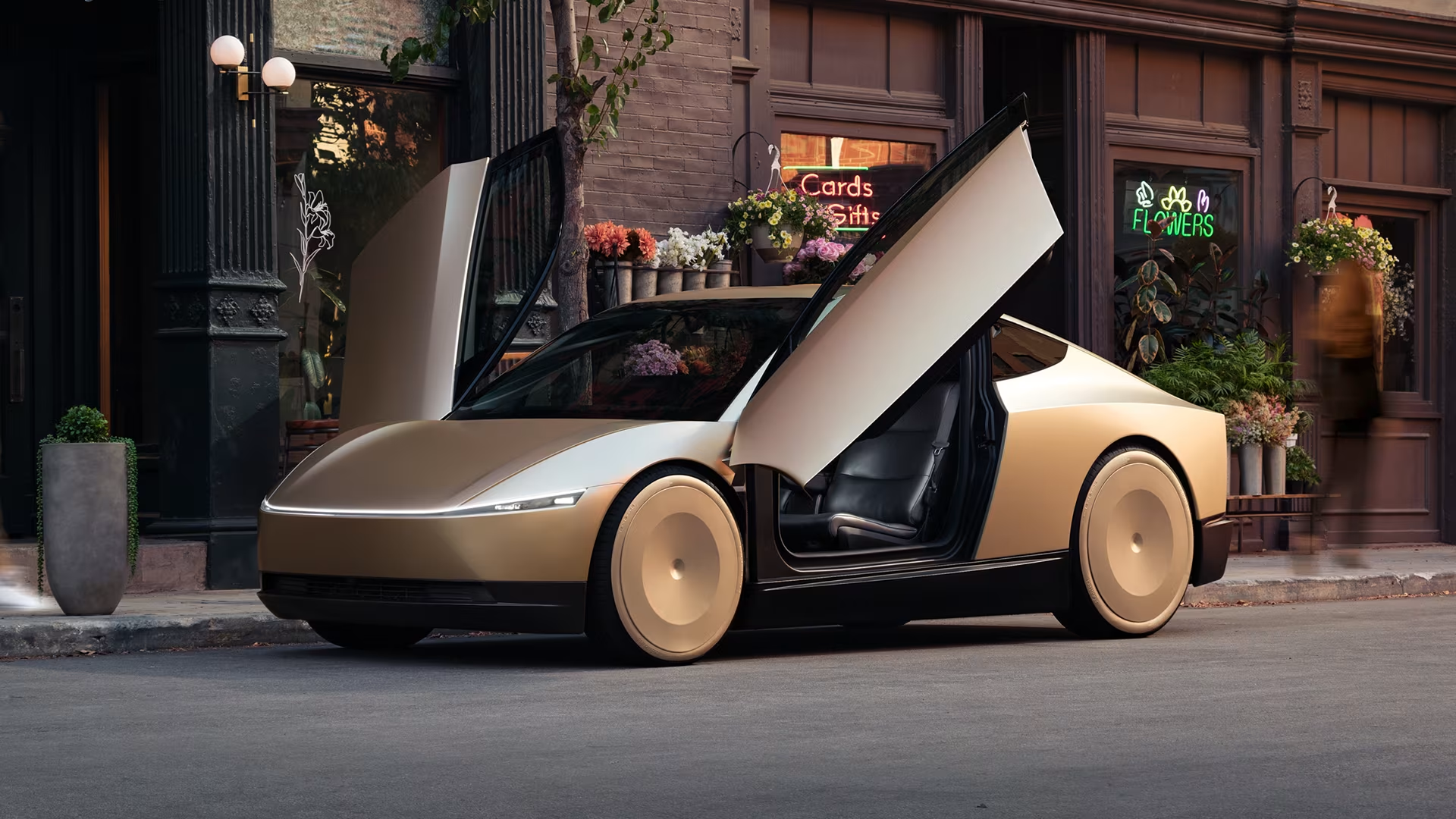
Tesla has marked a major production milestone with the unveiling of its first Cybercab — a purpose-built, fully autonomous vehicle designed for its robotaxi service — at the company’s Gigafactory in Texas, but fresh safety data from its existing autonomous fleet is drawing scrutiny.
The Cybercab, a two-door vehicle without a steering wheel or pedals, represents Tesla’s vision of future autonomy and is intended to serve as a robotaxi that can operate without human intervention. Production of the Cybercab is expected to ramp up in April 2026, positioning it as the centrepiece of Tesla’s emerging autonomous ride-hailing service.
Despite the celebratory announcement, detailed reports indicate potential safety challenges with Tesla’s current Robotaxi fleet in Austin, Texas. Data compiled from filings with the US National Highway Traffic Safety Administration (NHTSA) show a total of 14 crash incidents involving autonomous vehicles operating in robotaxi mode since the service began in June 2025. Based on miles travelled, the crash rate is nearly four times higher than that of human drivers, which have a minor collision roughly every 229,000 miles on average in North America.
The incidents logged include collisions with fixed objects at low speeds, a crash with a stationary bus, and minor impacts with trucks and roadside obstacles during clear weather and daylight conditions. One crash from July 2025 was reclassified by authorities as resulting in “minor with hospitalisation”.
Tesla’s autonomous taxi programme — which currently operates a limited number of Model Y vehicles outfitted with Full Self-Driving (FSD) software and monitored by a human “safety driver” — relies on camera-only sensor suites rather than LiDAR or other sensor types used by some competitors. The company’s choice of sensor approach and limited public crash disclosure have led to increased scrutiny from safety experts and regulators alike.
In contrast, other autonomous vehicle developers, such as Waymo, have released more detailed safety reports and logged far more autonomous miles with lower incident rates, highlighting diverging approaches within the industry.
Tesla’s push into robotaxis and full-stack autonomy remains a bold part of CEO Elon Musk’s vision for the company’s future, but the early crash data underscores the challenges Tesla faces as it seeks to scale up its next-generation autonomous mobility services.
Author: Kieran Seymour