
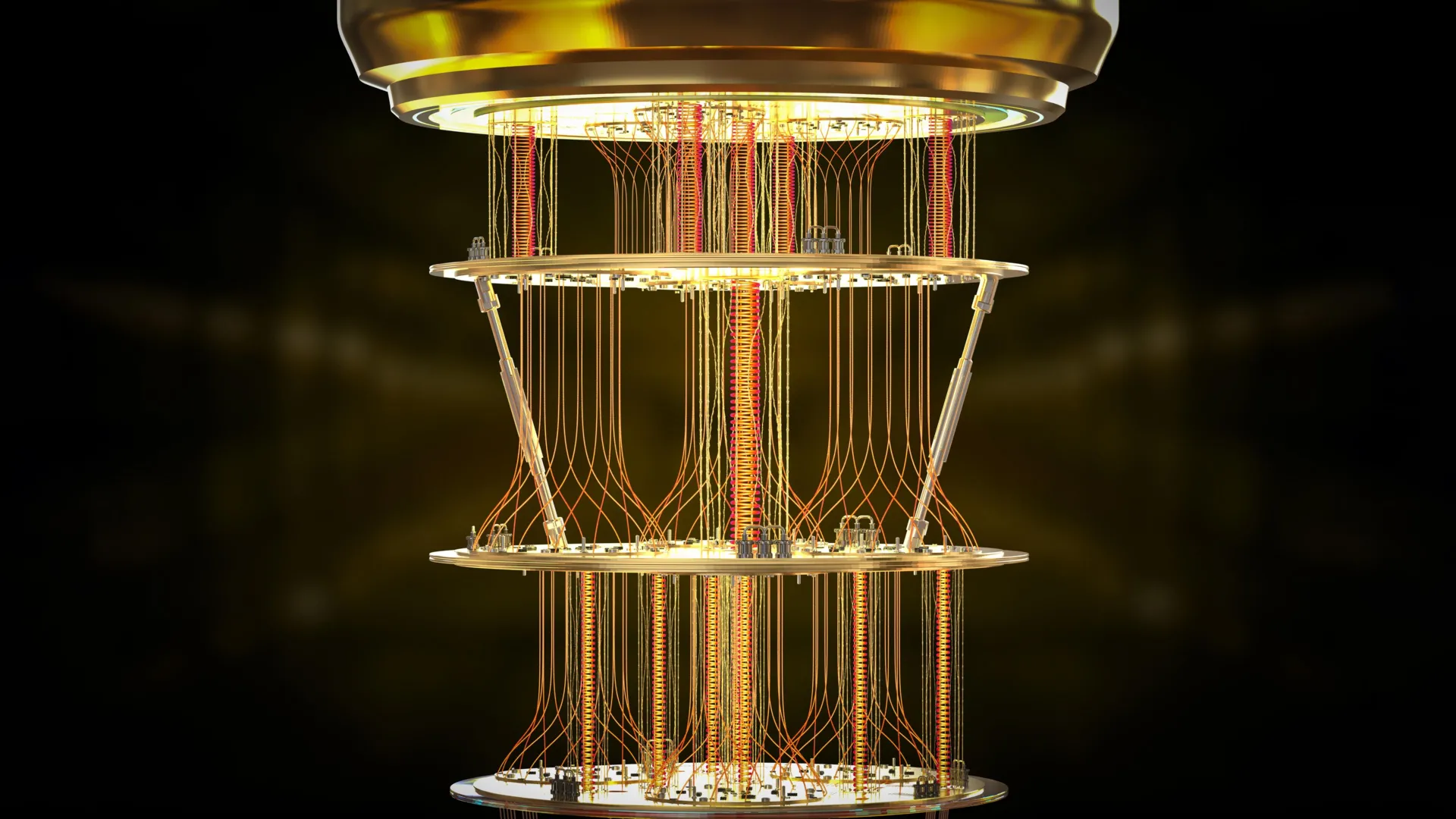
Scientists may have discovered a key material for ultra-fast, energy-efficient quantum computers. Researchers at the Norwegian University of Science and Technology (NTNU) report early evidence that a rare niobium-rhenium alloy, NbRe, could be a triplet superconductor—a material capable of transmitting both electricity and electron spin with zero resistance.
Triplet superconductors could stabilise quantum computers while drastically reducing their energy consumption. Unlike conventional “singlet” superconductors, which carry electrical current without spin, triplet superconductors can carry both electricity and spin. That allows spin-based information transfer with no energy loss, a breakthrough for quantum computing and spintronic technologies.
“A triplet superconductor is high on the wish list of many physicists working in the field of solid state physics,” said Professor Jacob Linder of NTNU, who leads research at the QuSpin centre.
“Materials that are triplet superconductors are a kind of ‘holy grail’ in quantum technology, and more specifically quantum computing,” Linder added.
The NTNU team collaborated with experimental groups in Italy, publishing their study in Physical Review Letters, where it was highlighted as an editor’s recommendation.
“Triplet superconductors make a number of unusual physical phenomena possible. These phenomena have important applications in quantum technology and spintronics,” Linder said.
Traditional superconductors already allow electricity to flow without resistance, but they do not carry spin. Triplet superconductors overcome this limitation, enabling the simultaneous transport of electrical and spin currents with zero energy loss.
“In our published article, we demonstrate that the material NbRe exhibits properties consistent with triplet superconductivity,” Linder noted. However, he emphasised that verification by other experimental groups is still required.
One advantage of NbRe is its superconductivity at 7 Kelvin, significantly higher than other potential triplet superconductors that require temperatures close to 1K. In superconductivity terms, this makes NbRe far more practical for real-world applications.
The findings suggest the long-sought triplet superconductor may finally be within reach, opening a pathway to quantum computers that are not only faster but dramatically more energy efficient.
Professor Linder highlighted the broader impact: “One of the major challenges in quantum technology today is finding a way to perform computer operations with sufficient accuracy. Triplet superconductors could help solve that problem.”
This discovery, if confirmed, could reshape the trajectory of quantum and spintronic devices, providing a foundation for next-generation computing that uses almost no electricity while maintaining unprecedented stability.
Author: George Nathan Dulnuan