
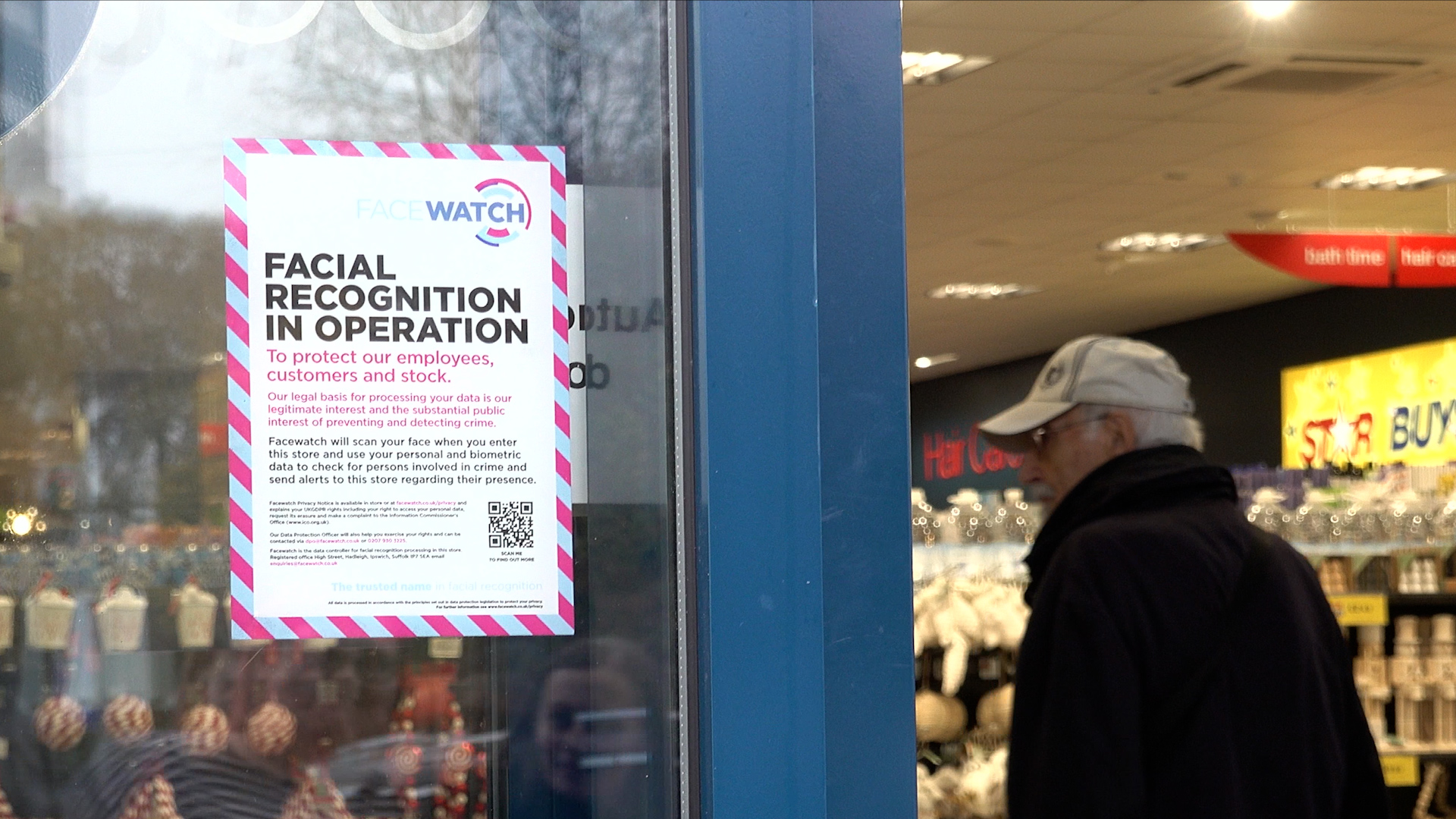
Retailers across the UK have increasingly turned to facial recognition technology as a way of responding to rising levels of shoplifting and growing abuse and violence towards shop workers. One system that has seen widespread adoption is Facewatch, which is used by a range of major and independent retailers. The technology scans the faces of people entering stores and compares them with a database of individuals who have previously been involved in theft or violent incidents. When a match is identified, store staff receive an alert so they can monitor the individual or take early action to prevent a crime from taking place.
The growing use of this technology comes at a time when retail crime has reached particularly high levels. Police data shows that around 530,000 shoplifting offences were recorded in England and Wales in the year to June 2025, an increase of approximately 13 percent compared with the previous year. Retail workers are also experiencing high levels of abuse, with industry figures suggesting that more than 2,000 incidents of violence or verbal abuse against shop staff occur every day. Many retailers argue that police resources are overstretched and that a large proportion of shoplifting incidents do not result in charges, allowing repeat offenders to continue targeting the same stores.
Facewatch says its system is designed to focus on repeat offenders rather than the general public. The company states that it complies with UK data protection laws and that images of customers who are not on the watchlist are not stored. According to Facewatch, individuals are only added to the database after repeated involvement in criminal behaviour, supported by evidence such as CCTV footage. Stores using the system are expected to clearly inform customers that facial recognition technology is in operation.
The scale of Facewatch’s use has increased rapidly. In July 2025, the system reportedly sent more than 43,000 alerts to retailers, more than double the number recorded in the same month the previous year. Over a twelve month period, the total number of alerts ran into the hundreds of thousands, reflecting the growing reliance on the technology across the retail sector. Supporters argue that this demonstrates how serious the problem of retail crime has become and claim that facial recognition can deter repeat offenders while helping staff feel safer at work.
However, the technology has also attracted strong criticism from privacy and civil liberties groups. Campaigners argue that facial recognition involves the collection and processing of highly sensitive biometric data and amounts to a form of private surveillance with limited public oversight. They warn that people can be scanned simply for entering a shop, even if they have not committed any offence. There have also been reported cases of misidentification, where innocent customers were wrongly flagged as offenders, leading to distressing confrontations before mistakes were acknowledged. Supporters of Facewatch reject claims that the system is unlawful or inherently dangerous, arguing that it is a proportionate response to rising crime and increasing threats to retail workers. Critics, however, warn that as facial recognition becomes more common in everyday spaces, clearer regulation and stronger safeguards will be needed to ensure the technology is used fairly and does not undermine individual privacy.
Author, Kieran Seymour