
Category: AI / Wearables / Mobile Tech
Published: March 1, 2026
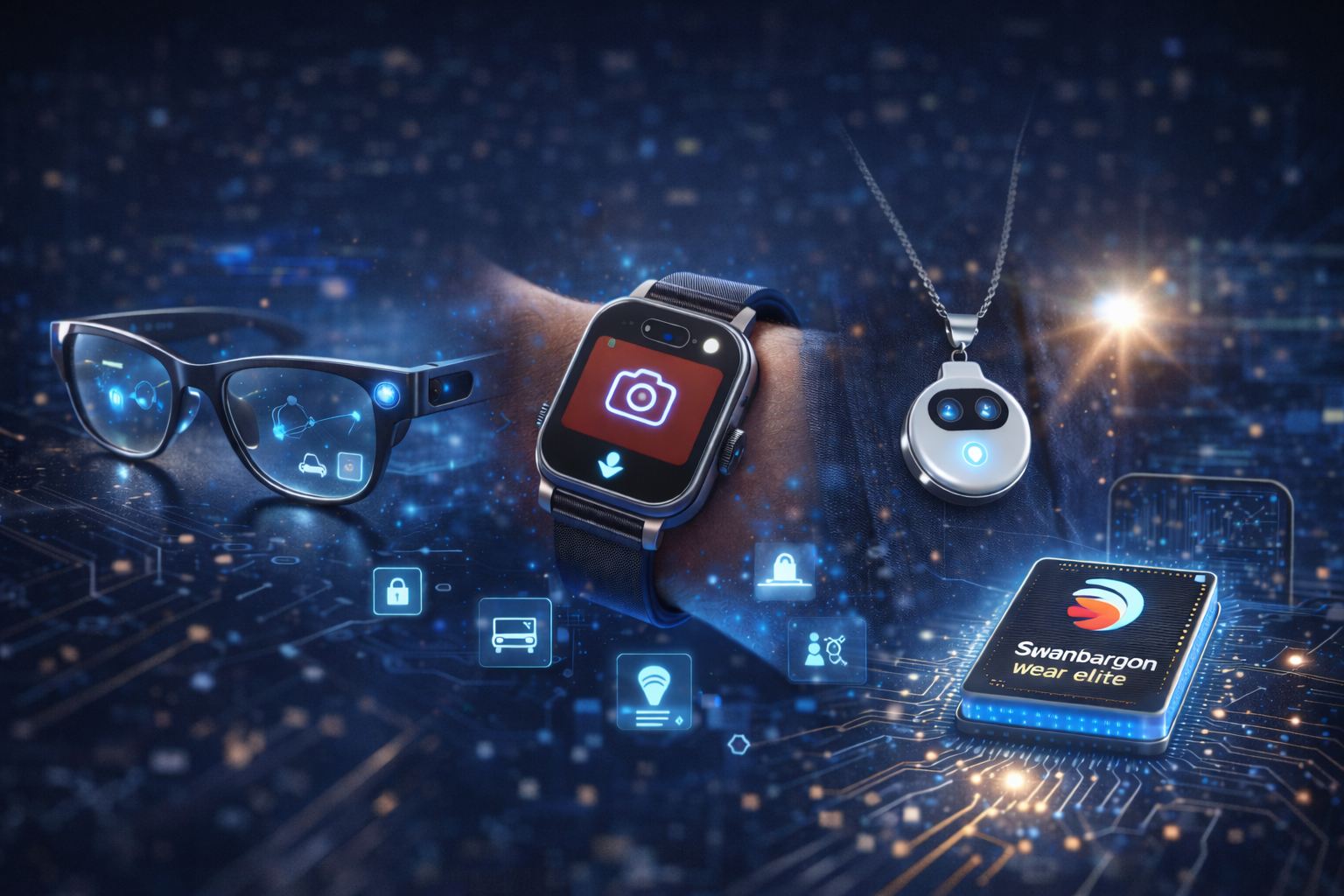
Qualcomm has unveiled its newest wearable processor, the Snapdragon Wear Elite, and it could mark the beginning of a major shift toward camera-equipped AI wearables. Announced at Mobile World Congress in Barcelona, the chip is designed to power next-generation smartwatches, AI pins, pendants, smart glasses and even camera-enabled earbuds.
Samsung, Google and Motorola are already developing hardware using the new chipset, with the first devices expected to launch this summer.
A Unified Chip for the Next Generation of Wearables
Unlike Qualcomm’s previous separate chip lines for smartwatches and smart glasses, the Snapdragon Wear Elite bridges categories. It’s a significantly more powerful processor capable of:
- Supporting onboard cameras
- Handling 1080p video input and output
- Streaming video for AI applications
- Running advanced AI models directly on the device
This move signals a future where wearables are not just accessories to smartphones but increasingly independent computing platforms.
More Powerful On-Device AI
One of the biggest upgrades is its improved neural processing unit (NPU). Qualcomm says the chip can support AI models with up to 2 billion parameters running directly on the device at around 10 tokens per second.
That means:
- More offline AI processing
- Voice-based assistants that work without cloud reliance
- Fitness and health tracking powered by AI
- Real-time contextual awareness through cameras and sensors
Instead of sending everything to the cloud, many AI tasks can now be handled locally, improving speed and privacy.
Are Camera-Equipped Watches Coming?
Yes — and possibly very soon.
Qualcomm showcased prototypes of watches with cameras built into the top edge. While these cameras may not be ideal for traditional photography, they’re intended for:
- AI-based object and scene recognition
- Face recognition for secure payments
- Smart key functionality for cars
- Context-aware AI interactions
Concept designs also include pendants with outward-facing cameras, similar to emerging AI pins and wearable assistants. These devices aim to provide environmental awareness without requiring users to wear glasses.
Better Battery, Faster Charging
Qualcomm promises up to 30% better battery life compared to its previous watch chip, potentially allowing devices to last multiple days depending on usage.
Charging is also getting a boost:
- Up to 50% battery in just 10 minutes
This is crucial as wearables increasingly aim to be worn all day — and even while sleeping.
Advanced Connectivity Features
The Snapdragon Wear Elite integrates six wireless technologies on-chip:
- RedCap 5G
- Bluetooth 6.0
- Ultra Wideband (UWB)
- GPS
- Satellite-connected NB-NTN messaging
- Micropower Wi-Fi 802.11ax
Micropower Wi-Fi could allow wearables to remain continuously connected without draining battery rapidly a key limitation in today’s AI-powered devices.
Where This Chip Could Appear
Qualcomm plans to expand the chip across nearly every wearable category, including:
- Smartwatches
- Smart glasses
- AI pendants and pins
- Wireless earbuds with cameras
- Sensor-connected bands
- Neural gesture-control bands
With more consumers adopting cellular-enabled wearables, standalone AI-powered devices may soon become more common than phone-dependent accessories.
The Bigger Picture
The Snapdragon Wear Elite represents more than just a processor upgrade it signals the arrival of AI “halos” of connected wearables surrounding users throughout the day.
The question now isn’t whether camera-equipped AI wearables are coming it’s where people will prefer to wear them: on their wrist, around their neck, in their ears, or on their face.
One thing is clear: the next wave of wearables won’t just track your steps they’ll see, hear and understand the world around you.
Author. Adigun Adedoye.