
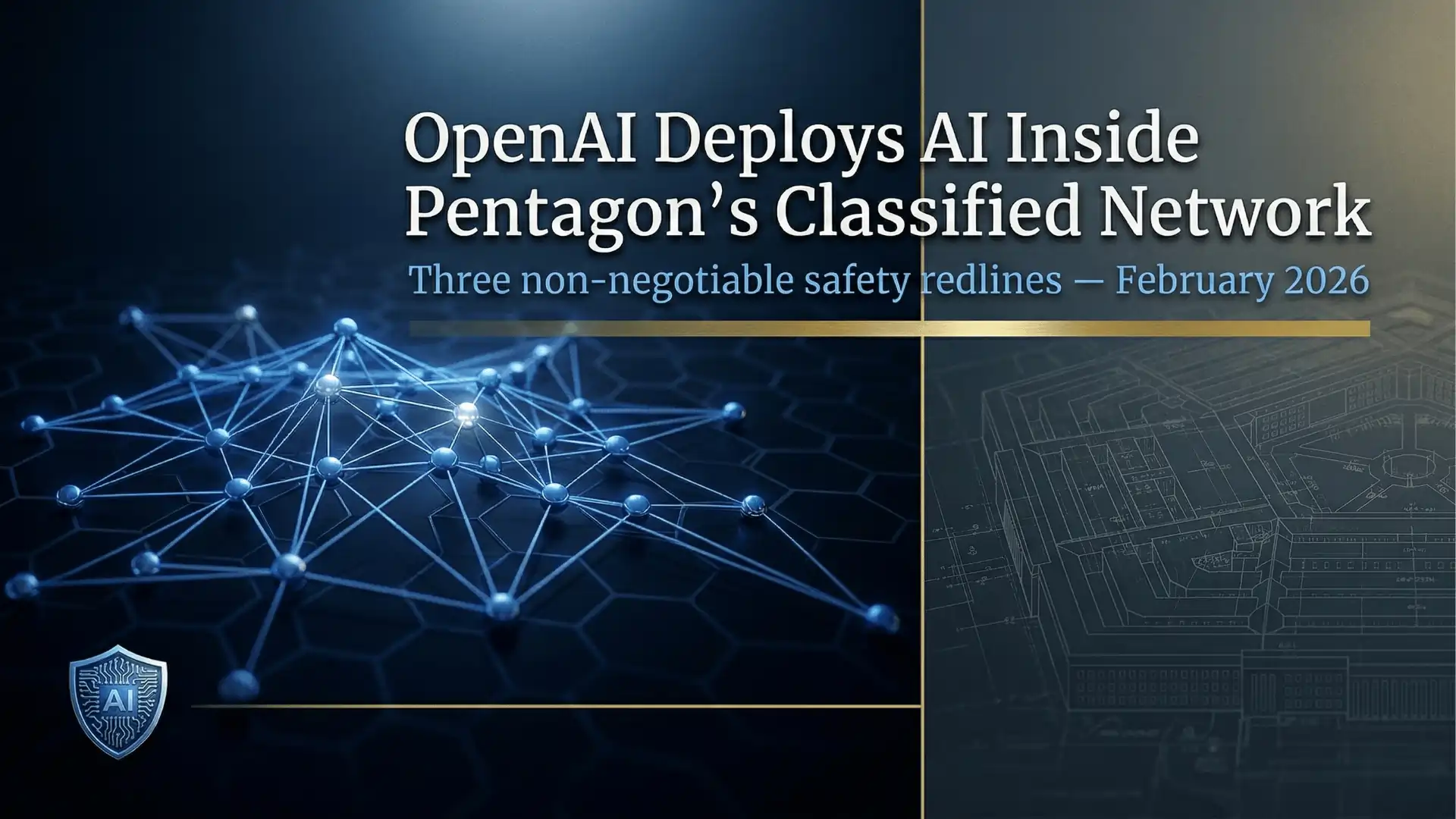
OpenAI has signed a major agreement with the U.S. Pentagon, marking a decisive turn in the commercial AI race. The partnership places one of the world’s most influential artificial intelligence firms at the centre of national defence strategy, where stakes extend far beyond market share. For Washington, the move secures access to frontier AI capabilities. For Silicon Valley, it redraws competitive lines overnight.
Defence contracts carry weight that few enterprise deals can match. They offer scale, long-term funding and political gravity. By aligning with the Pentagon, OpenAI positions itself not only as a commercial technology leader but as a strategic infrastructure partner. That shift mirrors decisions many high-growth companies confront as they mature: remain a pure consumer brand, or step into government and institutional arenas where scrutiny intensifies but influence expands.
The agreement inevitably sharpens tensions with competitors such as Anthropic, which has cultivated its own government relationships while emphasising AI safety and controlled deployment. Rival firms now face a strategic dilemma. Do they pursue similar defence ties and risk public backlash, or double down on enterprise and international markets? In an industry already divided over open access versus controlled release, government alignment adds another layer of competitive complexity.
The implications stretch across the broader AI ecosystem. Pentagon adoption signals confidence in advanced generative and analytical systems for mission-critical use cases, from logistics optimisation to intelligence analysis. Once defence agencies integrate such tools, suppliers gain credibility that can accelerate adoption in adjacent sectors, including energy, healthcare and finance. Procurement decisions in Washington often ripple into boardrooms worldwide. Executives will watch closely: if federal validation reduces perceived risk, commercial demand could follow.
Yet this move also invites scrutiny. How will OpenAI balance commercial product development with classified or restricted projects? Could tighter government collaboration influence research transparency or partnerships abroad? As geopolitical tensions intensify and nations treat AI as strategic infrastructure, corporate alliances with defence institutions will shape not only competition, but global technology policy. The Pentagon deal may prove less a single contract and more a defining inflection point in the AI arms race.
Author: Victor Olowomeye