
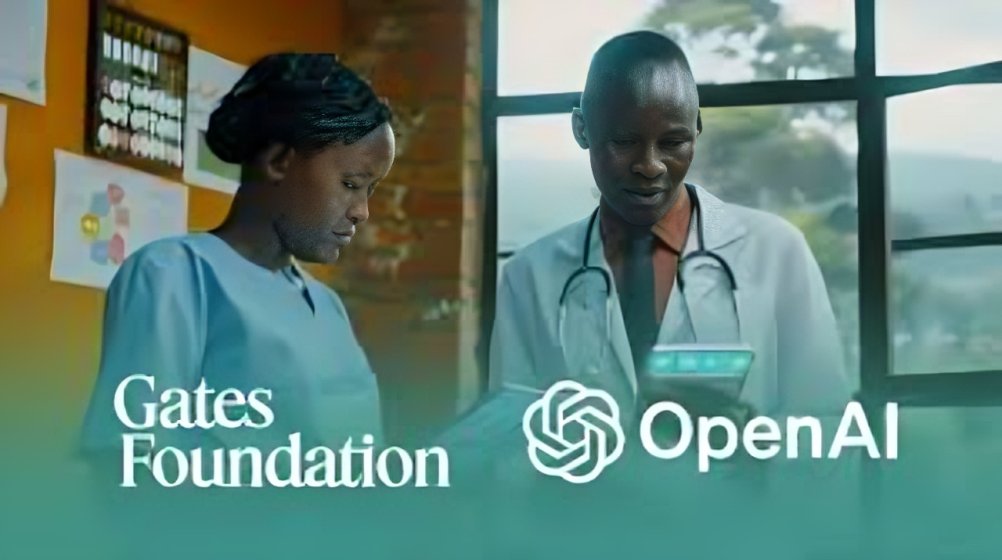
Primary healthcare across parts of Africa is under intense pressure: rising demand, too few clinicians, and shrinking aid budgets. In that context, AI isn’t being pitched as a medical miracle, but as a way to stop systems from buckling.
Backed by the Gates Foundation and OpenAI, a new project called Horizon1000 aims to roll out AI tools to 1,000 primary healthcare clinics by 2028, starting in Rwanda. The programme comes with $50m in funding and focuses on the unglamorous but critical work that eats up time in under-resourced clinics.
The timing matters. Global health aid fell by nearly 27% last year, according to the Gates Foundation, following cuts in the US, UK and Germany. Those reductions have coincided with the first rise in preventable child deaths this century, putting already fragile health systems under even more strain.
Horizon1000 isn’t about cutting-edge diagnostics. Instead, AI tools are expected to help with patient intake, triage, record-keeping, scheduling and basic medical guidance — especially in clinics where a single doctor may serve tens of thousands of people. Gates has said routine visits could be “about twice as fast” if administrative friction is reduced.
The emphasis is firmly on support, not replacement. OpenAI will provide technical expertise, while the Gates Foundation works with governments to ensure systems align with national rules and local languages. Rwanda was chosen as the pilot partly because of its existing digital health infrastructure and AI health hub in Kigali.
AI may also be used before patients even reach a clinic, offering guidance to groups such as pregnant women or people living with HIV, particularly where language barriers slow care.
Still, the challenges are familiar. AI only works with reliable data, power, connectivity and trained staff — all of which can be patchy. Past digital health pilots in low-income countries have struggled to scale once funding dried up. Horizon1000’s designers say close collaboration with local authorities is meant to avoid that fate, but long-term governance and accountability remain open questions.
For Africa’s health systems, this is less about hype and more about survival. With an estimated shortfall of nearly six million healthcare workers in sub-Saharan Africa, AI may offer limited relief — or become another layer of complexity. Horizon1000 will test whether narrowly focused, operational AI can actually help keep primary care running as resources continue to shrink.
Author – Mohammed Najem