
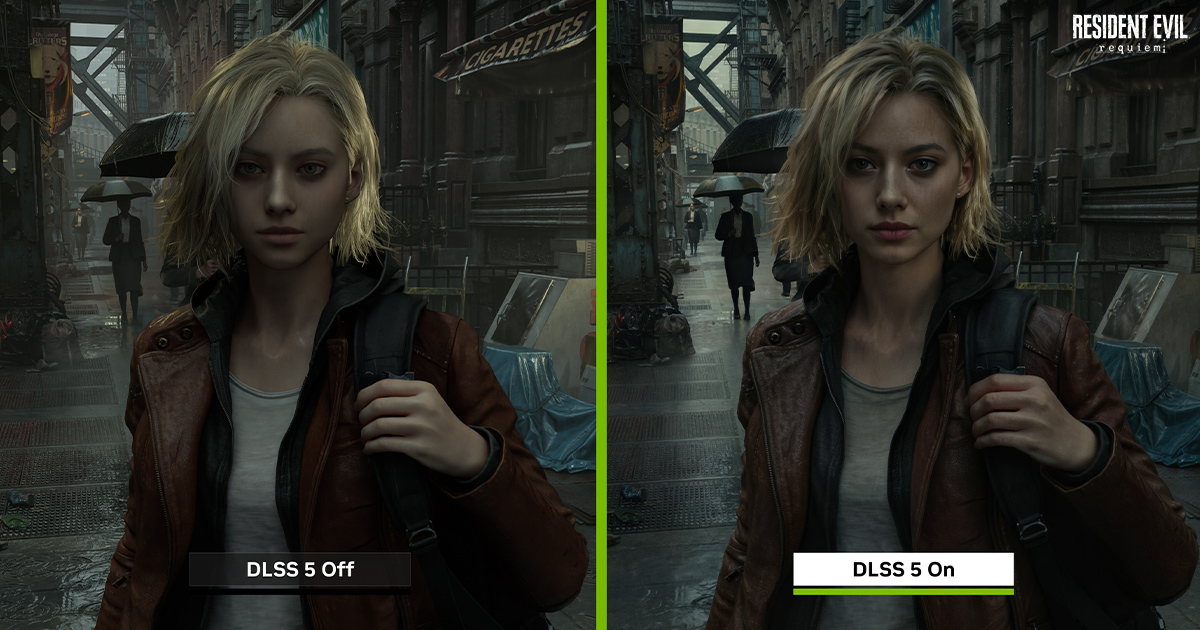
Nvidia has introduced DLSS 5, a new generation of its graphics technology that moves beyond upscaling into AI-driven image creation. The system uses neural rendering to generate lighting, textures, and materials in real time, reshaping how games appear on screen.
Earlier versions of DLSS focused on performance. They improved frame rates by rendering fewer pixels and reconstructing the image. DLSS 5 changes that role. It allows AI to create visual detail that was not originally rendered, including skin textures, hair, and environmental lighting.
This shift positions DLSS 5 closer to content generation than optimisation. The technology does not simply enhance an image; it alters it.
Criticism has emerged quickly. Some developers and players argue the system overrides artistic intent, producing visuals that diverge from a game’s original design. Reactions have been blunt, with critics calling it “AI slop” and likening it to an “Instagram filter for games”.
Developers have also raised concerns about communication. Some studios featured in Nvidia’s showcase said they “found out at the same time as the public” that their work would be used to demonstrate the technology. That response highlights a disconnect between platform providers and content creators, a tension that has surfaced in other industries adopting AI tools.
Nvidia has defended its approach. The company maintains that developers retain control over how DLSS 5 is implemented. Chief executive Jensen Huang compared the criticism to early reactions to ray tracing, which faced scepticism before becoming widely adopted.
The debate points to a broader question. When AI shapes the final image, who controls the creative output—the developer or the system?
Other industries offer parallels. Film studios adopted digital effects to expand visual possibilities but introduced stricter production workflows. Marketing teams use AI to scale content creation while enforcing tighter brand controls. Game development may follow a similar path, balancing efficiency with artistic oversight.
DLSS 5 presents clear advantages:
- Higher visual fidelity without proportional hardware demands
- Faster creation of detailed environments
- Potential for dynamic, responsive visuals
It also introduces risks:
- Loss of artistic consistency
- Player resistance to AI-altered imagery
- Dependence on proprietary technology
What if players reject AI-generated visuals despite technical gains? Could that slow adoption, or will performance improvements outweigh concerns about authenticity?
Nvidia is pushing real-time rendering into new territory. The industry now faces a decision about how much creative control it is willing to hand to AI.
Author: Pishon Yip