
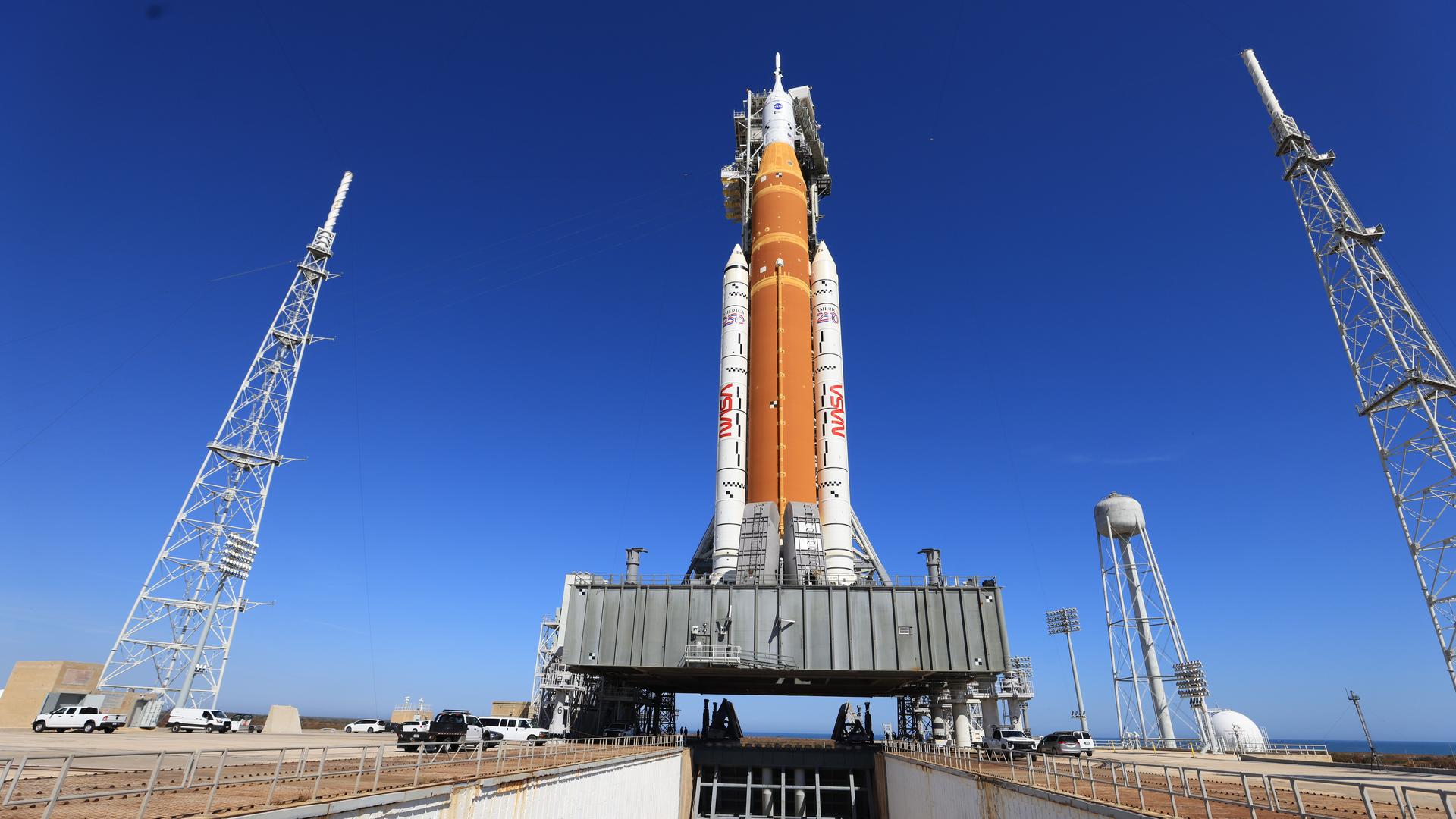
NASA has warned that its upcoming crewed mission around the Moon could be delayed after engineers identified a fault with the rocket intended to carry astronauts into deep space.
The Artemis II mission, which was targeting an early March launch from NASA’s Kennedy Space Center in Florida, may now be postponed because of an interruption in the flow of helium — a critical component used to pressurise fuel tanks and support engine functions during launch preparations. Officials say this issue “will almost certainly impact the March launch window”.
The four-astronaut crew, which includes three Americans — Reid Wiseman, Victor Glover and Christina Koch — and Canadian Jeremy Hansen, were due to become the first humans to travel around the Moon since the Apollo era in 1972. Artemis II is a 10-day mission designed to test life support, navigation and communication systems during a lunar flyby before returning to Earth.
Artemis II is a precursor to the planned Artemis III lunar landing mission, scheduled for 2028, which aims to return humans to the lunar surface. There are no plans for Artemis II to land on the Moon.
The helium fault emerged during a test of the rocket’s upper stage plumbing, known as the interim cryogenic propulsion stage. NASA said engineers are preparing to move the 322-foot Space Launch System (SLS) rocket and its Orion crew capsule off the launch pad and back into the Vehicle Assembly Building for further inspection and repairs.
The setback follows earlier technical problems, including a hydrogen leak that disrupted a previous dress rehearsal in early February. NASA had been optimistic after a subsequent test run showed minimal leakage, but the helium issue has added fresh uncertainty to the schedule.
If the March launch window is missed, NASA may aim for a later opportunity in April or beyond. The mission remains vital for validating systems that will be needed for future exploration, including a sustained human presence around the Moon and eventual missions to Mars.
Author: Kieran Seymour