
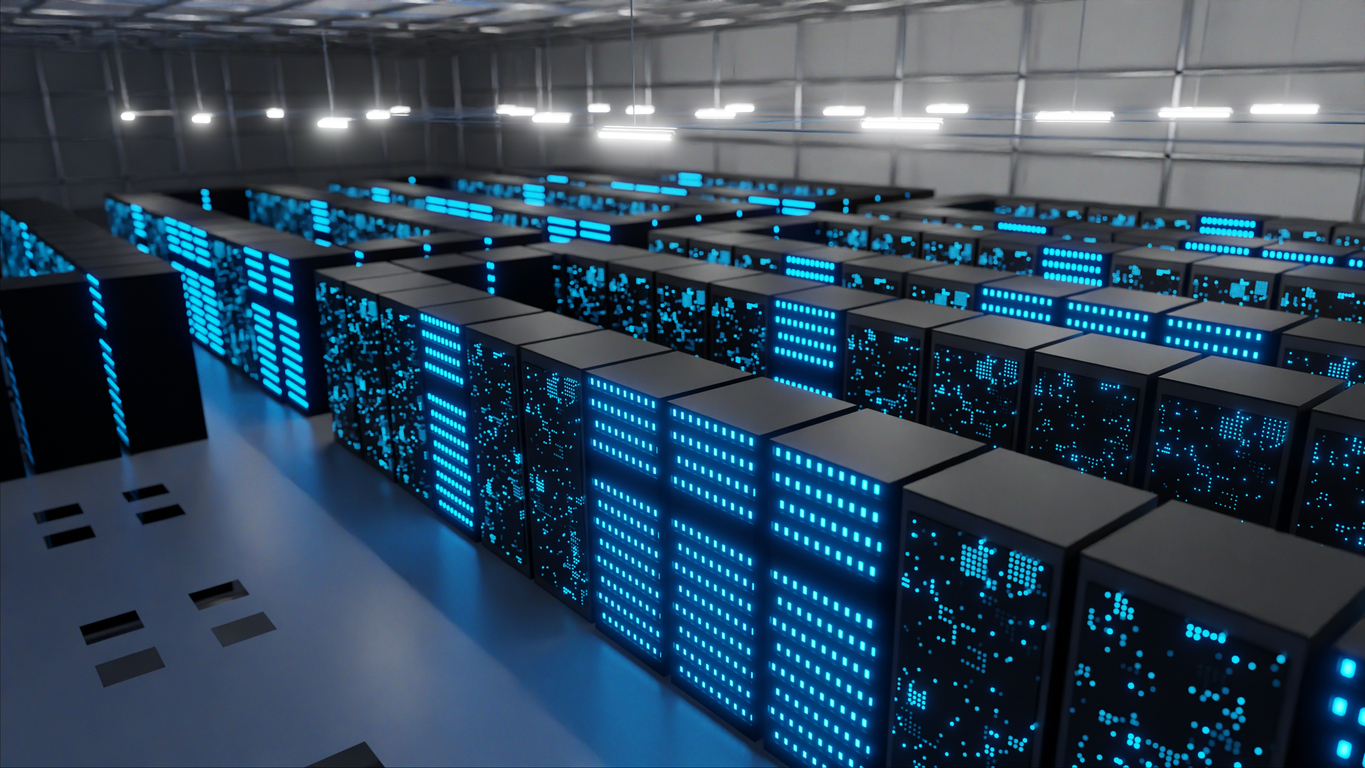
Microsoft is accelerating its push into artificial intelligence by building a new generation of supercomputers designed to meet the rising demands of advanced AI systems. The company is developing interconnected data centre networks that function as a single, powerful computing system, marking a shift away from traditional standalone infrastructure towards a more scalable, integrated approach.
At the centre of this strategy is Microsoft’s concept of an AI “superfactory”, where multiple data centres operate together in real time to train and run complex AI models. Rather than relying on a single location, these facilities are linked through high-speed networks that allow data to move seamlessly between them. This design significantly reduces the time required to process large workloads, enabling faster development and deployment of AI technologies.
The scale of this infrastructure highlights Microsoft’s ambition. The company is rolling out vast numbers of advanced GPUs alongside powerful CPUs and extensive storage systems to support applications such as large language models and enterprise AI tools. It is also investing in its own chip development to improve performance while lowering the cost of running AI at scale, a move that could reshape how businesses access computing power.
Partnerships remain a critical part of Microsoft’s expansion. By working closely with leading chipmakers, the company is integrating next-generation hardware into its data centres to boost performance and efficiency. These collaborations allow Microsoft to stay competitive in a market where access to cutting-edge technology often determines who leads and who falls behind.
Microsoft’s strategy raises a key question for the industry: will distributed supercomputing become the standard for AI, or will the cost and complexity limit its reach? As organisations increasingly depend on AI to drive growth and decision-making, access to large-scale computing power may define the next wave of industry leaders.
Author: Victor Olowomeye