
Published: December 2025
Category: Technology, Wearables, AI
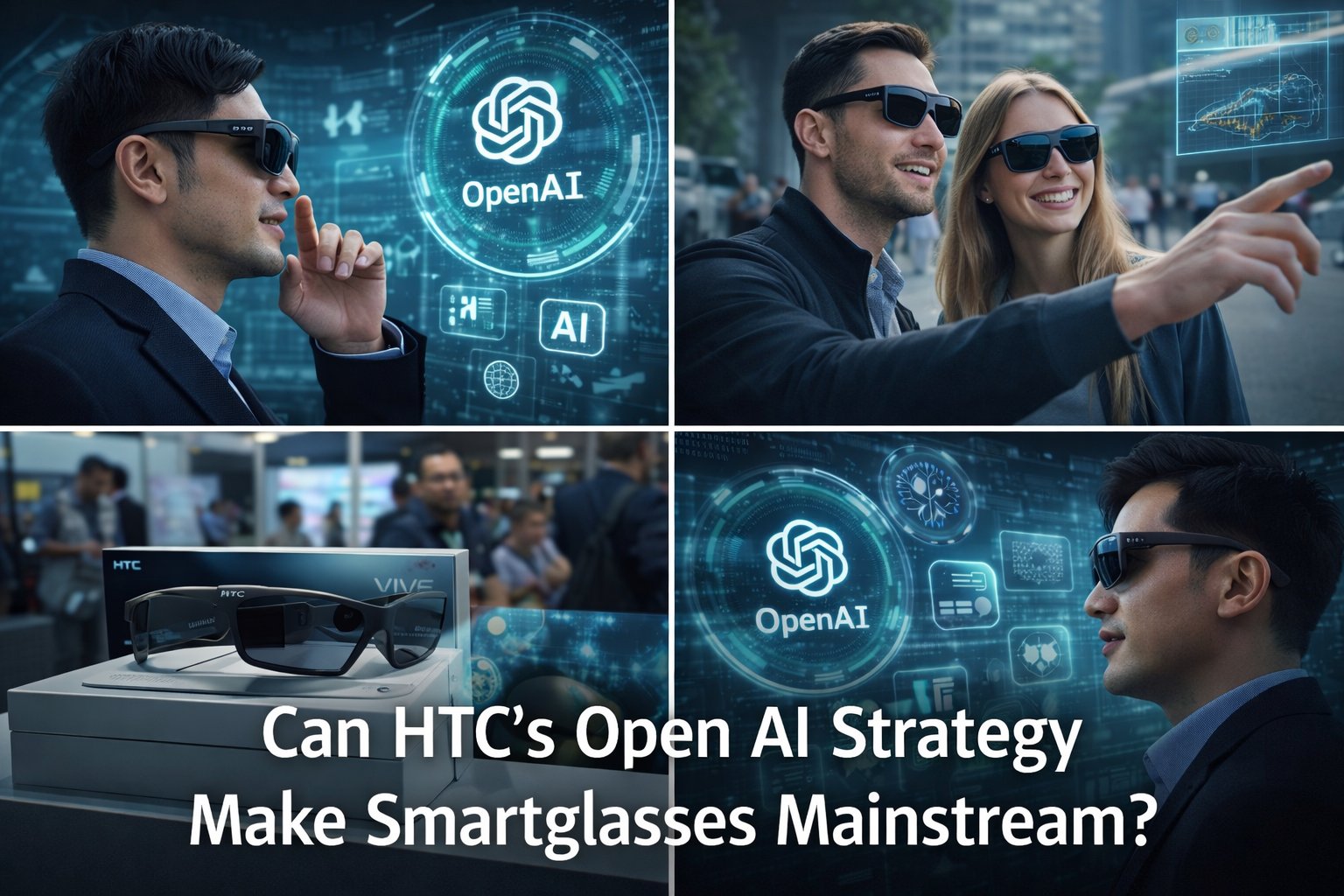
HTC is making a renewed push into consumer hardware by targeting the growing smart glasses market with a different approach to artificial intelligence. Rather than locking users into a single AI system, the company is betting that flexibility and choice will help its latest wearable stand out in an increasingly crowded space.
The new smart glasses, launched under HTC’s VIVE brand, allow users to select from multiple AI models instead of relying on one proprietary assistant. For consumers, this means greater control over how the device behaves, access to improvements across different AI platforms, and less dependence on a single ecosystem.
For everyday users, this approach could make smart glasses feel more future proof. As AI systems evolve quickly, the ability to switch or benefit from different models may extend the lifespan of the device and improve its usefulness over time. It also gives buyers more confidence that their glasses will not become outdated if one AI platform falls behind.
HTC is rolling the product out gradually, starting in Asia before expanding to Europe and the United States in 2026. This phased launch allows the company to tailor the hardware to regional preferences, including comfort and fit, which are critical factors for wearable technology. Entry into China is being approached cautiously due to strict rules around AI services and data use.
Competition in the smart glasses market is intensifying, with larger companies already holding a strong position. HTC believes its emphasis on user choice and privacy can appeal to customers who are wary of closed platforms and data heavy AI systems. The company has stressed that user data is not used to train AI models, which may resonate with buyers concerned about how personal information is handled.
For new customers, HTC’s strategy lowers the barrier to trying smart glasses by offering a more open and adaptable experience. For existing tech users, it signals a shift towards wearables that prioritise flexibility rather than control. While the market is still developing, HTC’s return to consumer hardware suggests smart glasses could be moving closer to wider adoption rather than remaining a niche product.
Author. Adigun Adedoye.