
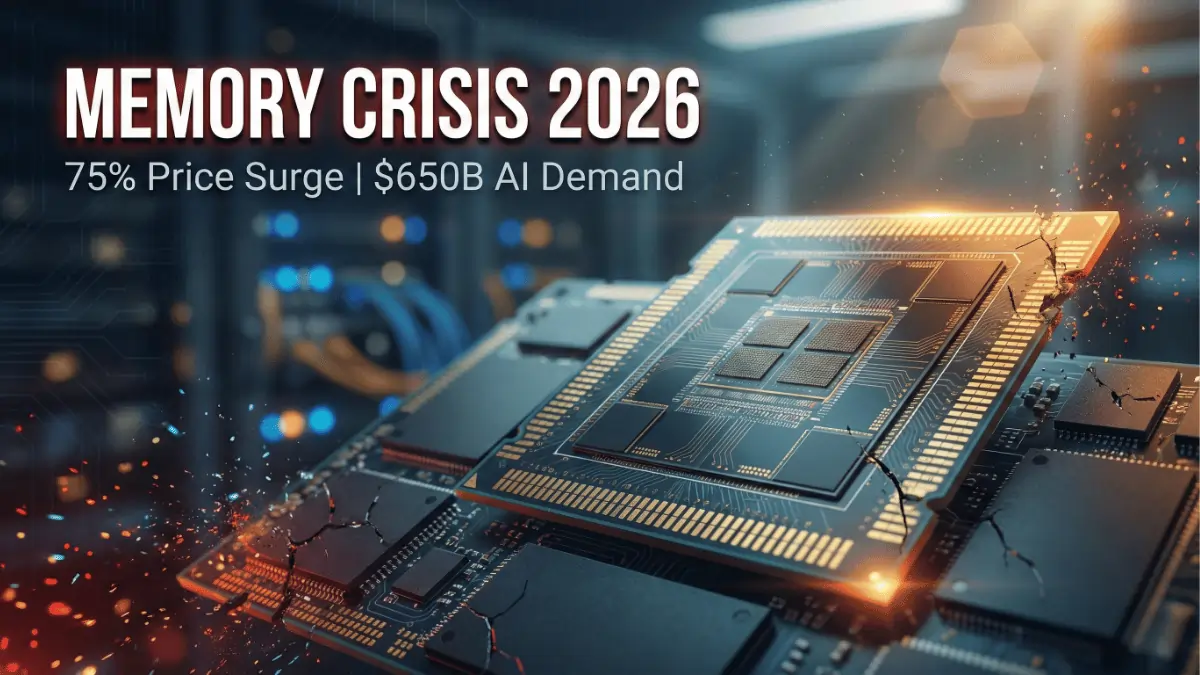
Demand for memory chips designed for artificial intelligence is rising at an extraordinary pace, driven by the rapid expansion of data-intensive technologies. Companies developing large language models, recommendation systems and real-time analytics tools now require vast amounts of high-performance memory to process and store data efficiently. This surge is reshaping the semiconductor industry, pushing manufacturers to scale production while racing to improve speed and energy efficiency.
At the centre of this growth is high-bandwidth memory, a specialised form of memory that allows processors to handle massive datasets at far greater speeds than traditional alternatives. AI workloads depend on the ability to move data quickly between chips, and without sufficient memory performance, even the most advanced processors struggle to deliver results. As businesses deploy more AI systems, demand for these components continues to climb sharply.
Major technology firms are competing aggressively to secure supply, often entering long-term agreements with chipmakers to avoid shortages. This mirrors the scramble seen during previous semiconductor crises, where limited availability disrupted entire industries. The difference now lies in the scale: AI applications require significantly more memory per system, intensifying pressure on an already complex supply chain.
Manufacturers are responding by investing heavily in new fabrication facilities and advanced packaging technologies. Companies such as Samsung and SK Hynix are expanding production capacity while refining designs to meet the specific needs of AI-driven workloads. These investments aim to ensure a steady flow of components, yet they also introduce financial risk if demand shifts or technological priorities change.
The surge in AI memory demand raises a pivotal question for the industry: can supply keep pace with innovation, or will shortages slow the next phase of AI growth? As organisations increasingly rely on data-driven systems, access to high-performance memory may become a defining factor in determining which companies lead and which fall behind.
Author: Victor Olowomeye