
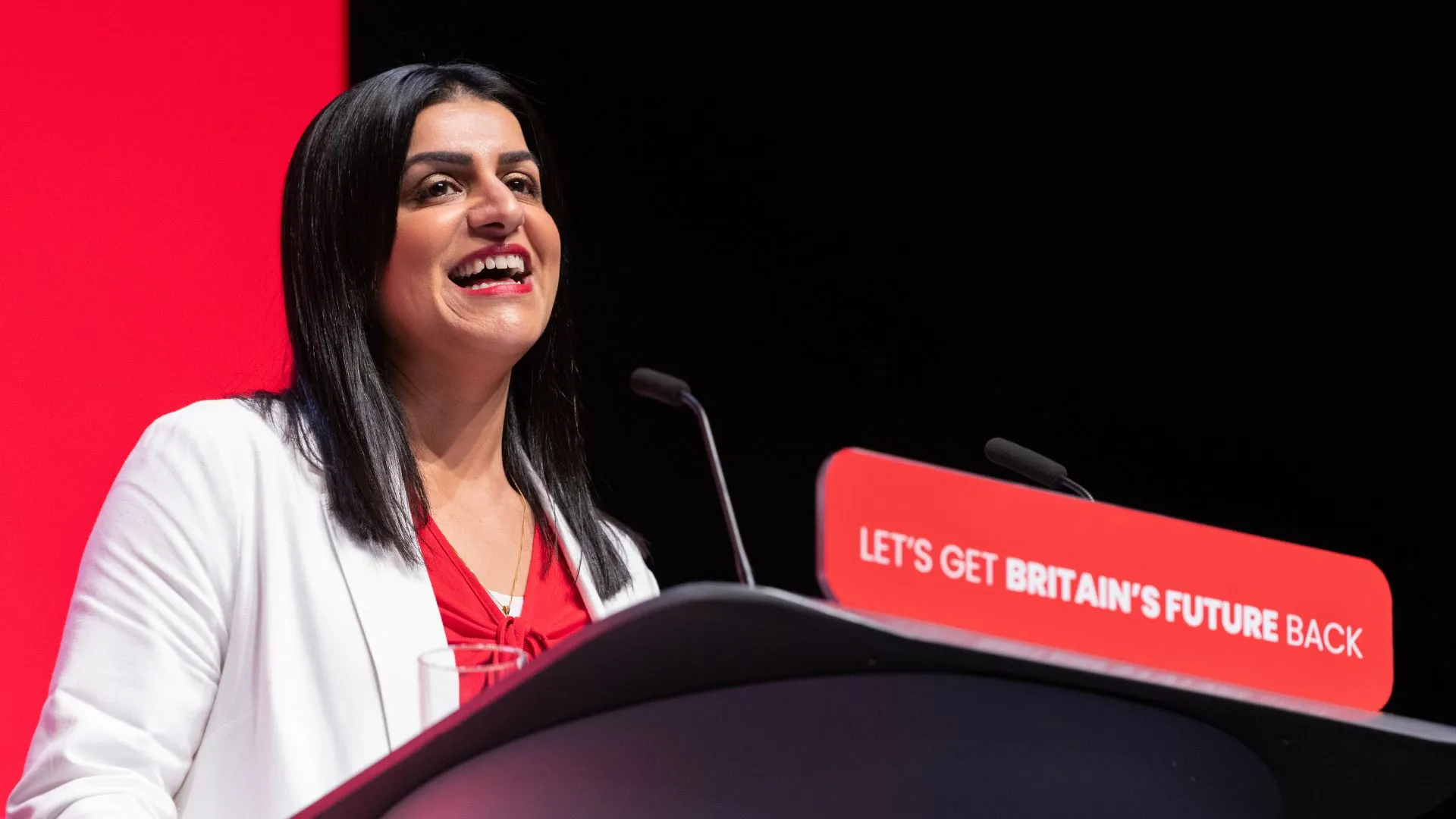
Shabana Mahmood has committed £140m to new technology that officials say will free up six million hours of police time each year, the equivalent of 3,000 officers. The investment underpins the most significant overhaul of an “outdated” policing model built for a different century.
AI will move from pilot projects into daily police work. Forces will use it to analyse CCTV, doorbell and mobile phone footage at speed, detect deepfakes, conduct digital forensics and reduce administrative drag from tasks such as form filling, redaction and transcription. The aim is simple: return officers to frontline duties rather than desks.
“Criminals are operating in increasingly sophisticated ways. However, some police forces are still fighting crime with analogue methods,” Mahmood said.
“We will roll out state-of-the-art tech to get more officers on the streets and put rapists and murderers behind bars.”
The government will also expand live facial recognition capacity fivefold. The number of facial recognition vans will rise from 10 to 50, available to forces nationwide to help locate wanted suspects. Supporters argue the move mirrors how private-sector organisations deploy automation to handle scale when demand outpaces human capacity.
The measures form part of reforms billed as the biggest shake-up of policing in England and Wales in 200 years. They include:
- Creation of an FBI-style National Police Service to tackle terrorism, fraud and serious organised crime
- A “significant reduction” in the number of police forces, potentially merging 43 forces into as few as 12
- Neighbourhood policing teams in every council ward to address the “epidemic” of everyday crime
- A mandatory, renewable “licence to practise” for serving officers
- New powers for the home secretary to dismiss chief constables in failing forces
A government white paper sets out the plan to institutionalise AI through a new national centre, Police.AI, tasked with scaling successful pilots across the country. The move comes despite controversy last year after an AI “hallucination” influenced a decision by West Midlands Police to ban Maccabi Tel Aviv supporters from a match in Birmingham.
Police.AI will also oversee tools such as AI chatbots already being tested to triage non-urgent online queries. The white paper commits to reviewing whether the policing of non-crime hate incidents is “proportionate”, a long-running flashpoint in debates about free expression and police workload.
At the centre of the reforms sits the proposed National Police Service, described by ministers as “Britain’s FBI”. It will merge the National Crime Agency, Counter Terror Policing, the National Police Air Service and National Roads Policing into a single body led by a national police commissioner, the most senior police chief in the country.
Laying out the plans in the Commons, Mahmood said: “Taken together, these are, without question, major reforms.
“A transformation in the structures of our forces, the standards within them and the means by which they are held to account by the public, these are the most significant changes to how policing works in this country in around 200 years.
“The world has changed immeasurably since then, but policing has not.
“We have excellent and brave police officers across the country, we have effective and inspiring leaders across many of our forces, but they are operating within a structure that is outdated, making the job of policing our streets and protecting our country harder than it should be.”
Police leaders broadly welcomed the overhaul. Gavin Stephens, chair of the National Police Chiefs Council, called the reforms “long overdue” and pointed to fragmentation as a barrier to progress.
“You’ve got rapidly changing new technologies which show huge promise, then you can’t get them rolled out because there are too many decision makers in the system,” he said.
“If we want to put in the hands of every neighbourhood cop, every local team, the best available technology, we’ve got to do that once for everybody and then get it rolled out.”
The reforms will be phased in through to 2034. Asked whether they had arrived too late, Stephens replied: “Twenty years ago would have been good. Today is good as well. So we ought not to lose any time.
“It’s really important for us in these changes that we keep momentum and see them through.”
Critics warn the changes concentrate power at the centre. The Association of Police and Crime Commissioners said the proposals risk undermining accountability.
“This concentration of policing power in England and Wales is constitutionally alien and brings enormous risks,” said Emily Spurrell, the APCC chair.
Author: George Nathan Dulnuan