
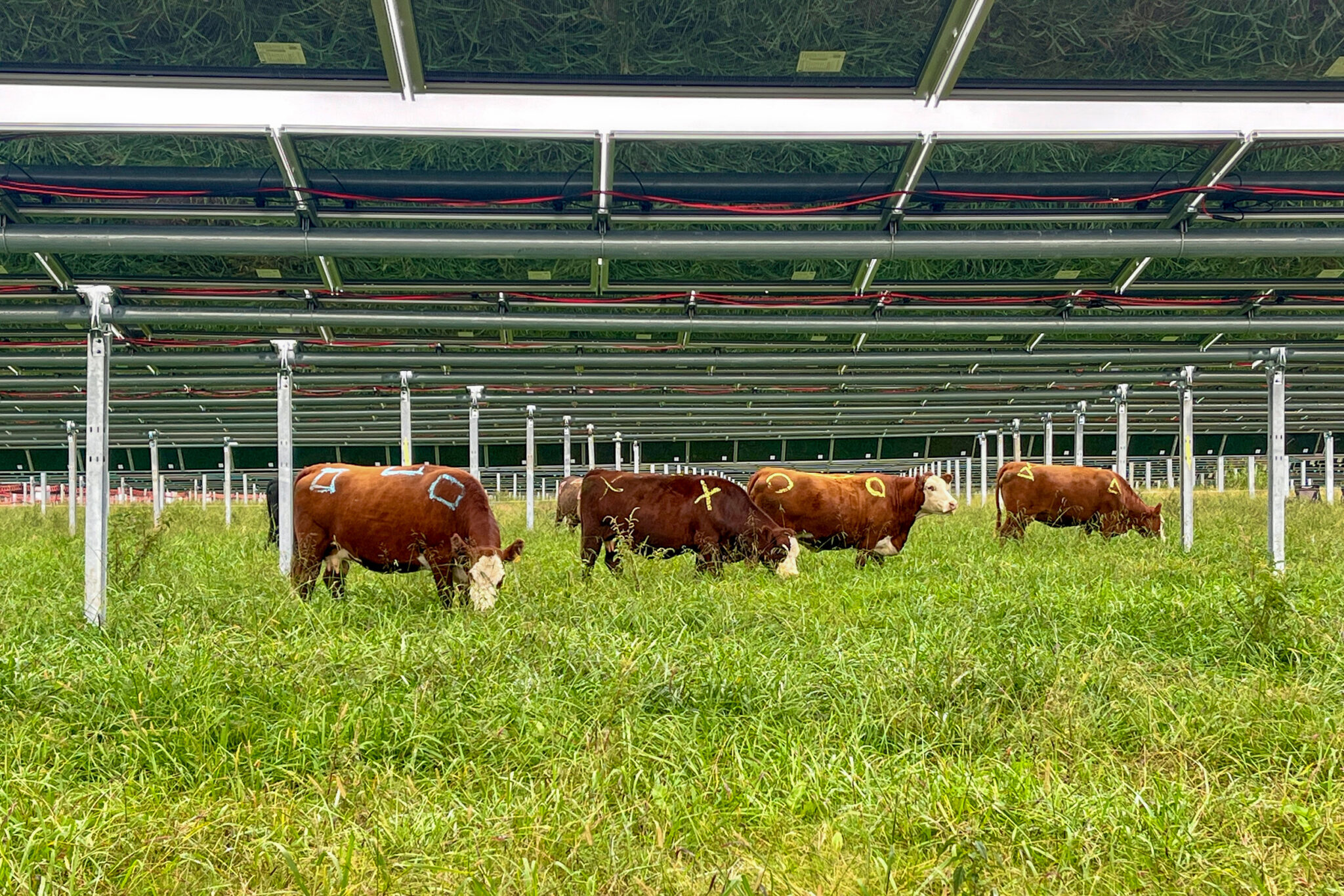
A solar farm in Tennessee is challenging a long-standing assumption: that renewable energy and agriculture must compete for land. Instead, one project is proving they can coexist—literally side by side.
At a 40-acre site in Christiana, rows of solar panels generate electricity while cattle graze beneath them. The initiative, led by Silicon Ranch, marks a shift in how land is used, blending energy production with livestock farming in a single, integrated system.
Rethinking Land Use in the Energy Transition
The concept, known as agrivoltaics, combines solar generation with agricultural activity. Traditionally, this has involved crops or smaller livestock like sheep. Introducing cattle—larger, heavier and more difficult to manage—pushes the model into new territory.
The goal is clear. As demand for electricity rises—driven in part by expanding data centres—developers need land. At the same time, farmers face increasing financial pressure. This approach attempts to solve both challenges at once.
From a distance, the farm looks conventional. Solar panels stretch across the landscape. Beneath them, however, pasture replaces gravel, providing shade and grazing space for a small herd of cows.
Engineering Around a Practical Challenge
Integrating cattle into solar sites introduces a problem: space. Solar panels typically tilt steeply to maximise energy capture, leaving little room underneath.
Engineers have adapted. The panels can shift to a more horizontal position when cattle are grazing, creating enough clearance for movement. Workers rotate livestock between sections, allowing parts of the site to operate normally while others accommodate the animals.
This balance—between efficiency and usability—defines the project’s success.
Why Farmers Are Paying Attention
For farmers, the financial implications stand out. Leasing land for solar use can generate around $1,000 per acre, significantly higher than traditional agricultural returns.
That income offers a buffer against rising costs, climate pressures and volatile markets. It also allows land to remain productive rather than being permanently repurposed.
The model creates multiple revenue streams:
- Electricity generation
- Livestock production
- Land leasing agreements
For many agricultural businesses, diversification is no longer optional—it is survival.
Environmental Benefits Beyond Energy
Early findings suggest the system offers more than financial upside. Pasture beneath solar panels retains moisture more effectively, improving drought resilience. Shade reduces heat stress for cattle, helping them maintain weight and requiring less water.
These microclimate effects could prove critical as extreme weather becomes more common.
Researchers argue that when designed properly, these systems turn a perceived trade-off into an advantage.
“Solar is one of the most powerful tools we have for cutting emissions and … is cost-competitive with fossil fuels,” said Taylor Bacon. “I think we’re starting to see enough research that, when you do it well, the land use can be more of an opportunity than a downside.”
Scaling the Model—And Its Limitations
Despite its promise, the approach is not without challenges. Cattle require more robust infrastructure than sheep, increasing costs and complexity. Equipment must withstand both environmental conditions and the presence of large animals.
Adoption will depend on whether these systems can scale efficiently. Developers must also address concerns from farming communities wary of losing agricultural identity or damaging soil quality.
Yet momentum is building. Silicon Ranch already manages thousands of acres where livestock graze alongside solar installations, suggesting broader adoption may follow.
A Shift in How Energy Projects Are Designed
This Tennessee project reflects a wider rethink in infrastructure planning. Energy development is no longer just about output—it is about integration.
The question facing the industry is no longer where to build, but how to build without displacing existing systems.
What if future solar farms are designed not as replacements for farmland, but as extensions of it?
If this model proves viable at scale, it could redefine how countries expand energy capacity—without sacrificing the land that sustains them.
Author: George Nathan Dulnuan