
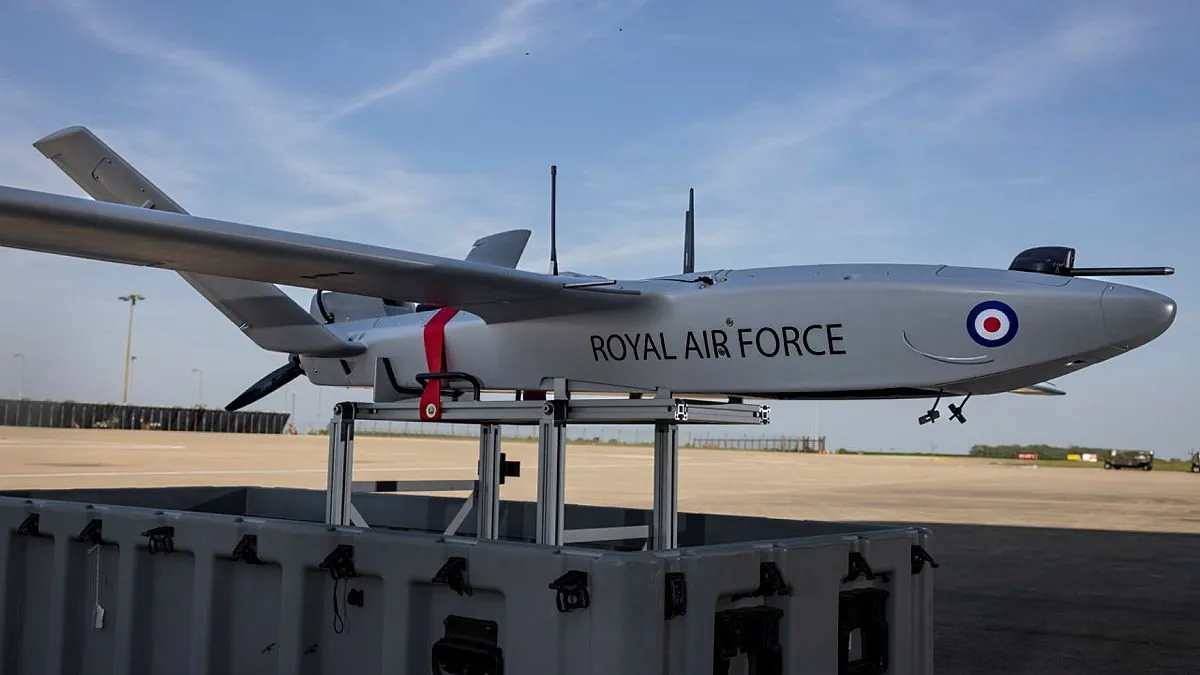
The Royal Air Force is moving faster than expected towards a future where pilots no longer fly alone. Autonomous “robot” fighter jets—designed to operate alongside crewed aircraft—could become operational sooner than previously planned, signalling a shift in how air combat is conducted.
At the centre of this evolution sits a simple idea: pair human pilots with intelligent, unmanned systems that extend capability while reducing risk. These aircraft, often described as “loyal wingmen,” will fly ahead of traditional jets, gathering intelligence, jamming enemy systems or even engaging targets.
From Concept to Capability—Faster Than Expected
The RAF has long planned to integrate unmanned systems into its future combat strategy. What has changed is the pace. Advances in artificial intelligence, combined with lessons from modern conflicts, have pushed development timelines forward.
Programmes linked to the UK’s Future Combat Air System—including the Tempest initiative—already emphasise a mix of crewed and uncrewed platforms working as a single network.
Now, that vision is beginning to materialise sooner than expected.
Rather than replacing pilots, these systems are designed to amplify them:
- Autonomous jets can take on high-risk roles ahead of manned aircraft
- Swarms can overwhelm defences or gather real-time battlefield data
- AI systems can react faster than human decision-making alone
A Response Shaped by Modern Warfare
Recent conflicts have exposed how quickly air combat is evolving. Drone warfare, electronic jamming and real-time surveillance now shape outcomes on the ground.
The RAF has already begun adapting. New systems, such as electronic warfare drones capable of disrupting enemy radar, show how unmanned technology is being integrated into operations.
The logic is straightforward. Sending a pilot into contested airspace carries significant risk. Sending an autonomous system changes that equation entirely.
For defence planners, the question is no longer whether to adopt these technologies—but how quickly they can be deployed at scale.
What This Means for Traditional Fighter Jets
Manned aircraft like the Typhoon and F-35 will remain central to operations. But their role is evolving.
Instead of acting alone, pilots will increasingly command a network:
- Multiple unmanned aircraft acting as force multipliers
- Real-time data streams feeding into cockpit decisions
- AI systems handling routine or high-risk tasks
This transforms the pilot’s role from operator to mission controller.
It mirrors a shift seen in other industries. In business, leaders no longer execute every task—they oversee systems, data and teams that operate simultaneously. Air combat is moving in the same direction.
Strategic Implications Beyond the RAF
The acceleration of autonomous fighter technology reflects a broader global race. Nations are investing heavily in AI-driven defence systems, recognising that speed, data and automation now define military advantage.
For the UK, moving faster carries both opportunity and pressure:
- Early deployment could strengthen deterrence and global standing
- Delays could risk falling behind competitors investing in similar capabilities
The stakes are high. Air superiority has long depended on technology. Now, it depends on how effectively that technology integrates human and machine decision-making.
The Question Facing the Future of Air Combat
Autonomous “robot” fighter jets promise greater efficiency, reduced risk and expanded capability. But they also introduce new uncertainties.
How much control should remain with human pilots?
What happens when AI systems make decisions at speeds humans cannot match?
The RAF’s accelerated timeline suggests one thing clearly: the future of air combat is no longer theoretical. It is arriving faster than expected—and it will redefine what it means to command the skies.
Author: George Nathan Dulnuan