
Published: February 2026
Category: AI & Media / Tech Industry
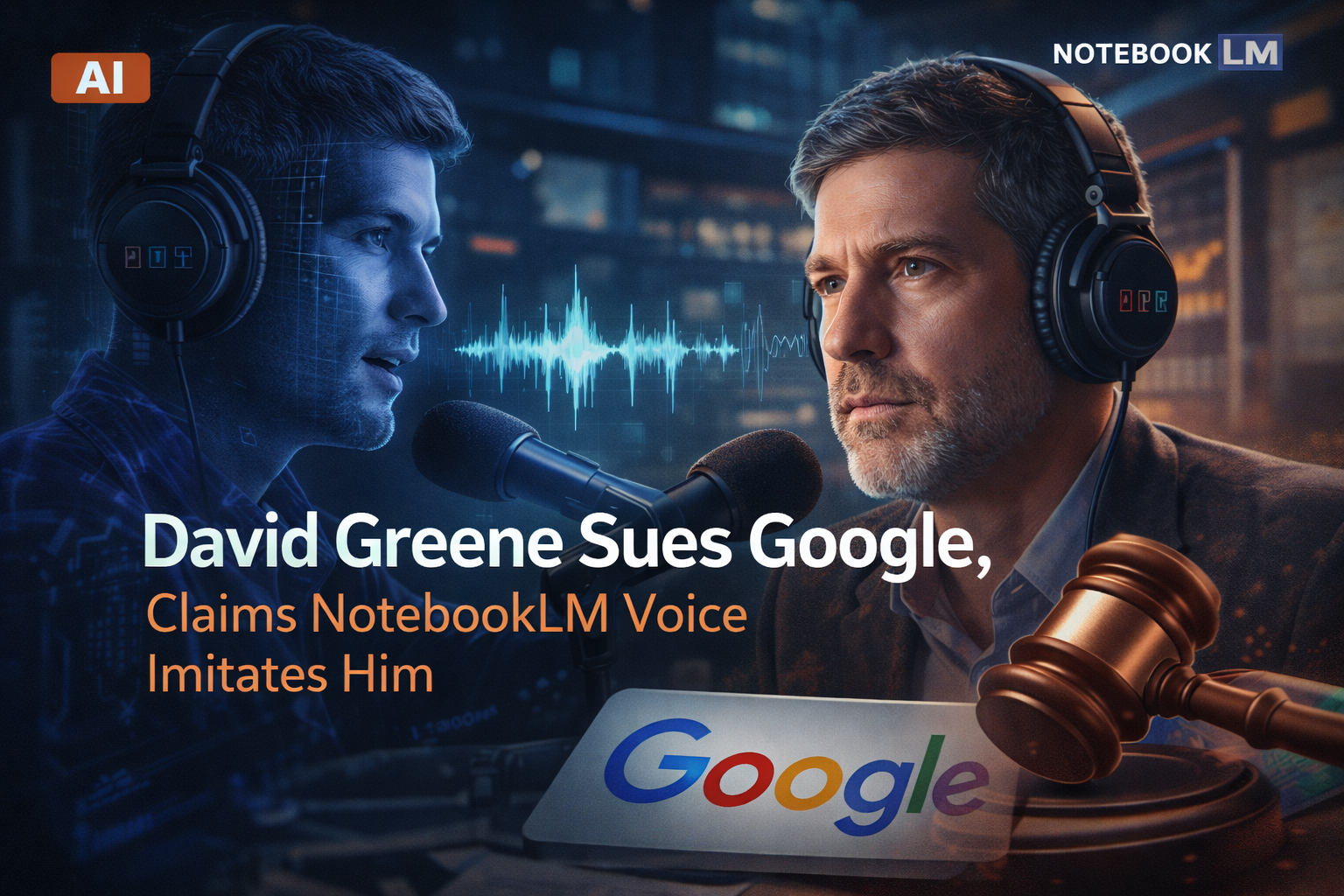
Veteran broadcaster David Greene has filed a lawsuit against Google, alleging that the male AI-generated podcast voice in its NotebookLM tool closely imitates his own voice and speaking style.
Greene, a long time host of NPR’s Morning Edition and current host of KCRW’s Left, Right, & Centre, claims the AI voice replicates his cadence, intonation, and even filler words such as “uh.” According to reporting by The Washington Post, Greene said he became convinced of the resemblance after friends, colleagues, and family repeatedly contacted him about it.
“My voice is, like, the most important part of who I am,” Greene said, underscoring how central vocal identity is to his career and personal brand.
The Allegation
Google’s NotebookLM allows users to generate AI-hosted podcasts using synthetic voices. Greene alleges that one of the default male voices sounds strikingly similar to him, raising concerns about consent, compensation, and the broader issue of voice replication in AI systems.
A Google spokesperson denied the claim, stating that the voice used in NotebookLM’s Audio Overviews is unrelated to Greene and is based on a paid professional actor hired by the company.
A Growing Legal Frontier
This case adds to a growing list of disputes involving AI-generated voices that allegedly resemble real individuals. In a high-profile example last year, OpenAI removed a ChatGPT voice after actress Scarlett Johansson objected, saying it imitated her voice without permission.
As AI tools become increasingly capable of mimicking human speech patterns, the legal boundaries around voice rights, likeness, and intellectual property are still being defined. Courts will likely play a critical role in determining whether vocal style and cadence can be protected and how companies must navigate consent when building AI-powered audio products.
The lawsuit could set an important precedent for broadcasters, actors, and public figures whose voices are central to their professional identity.
Author. Adedoye Adigun.